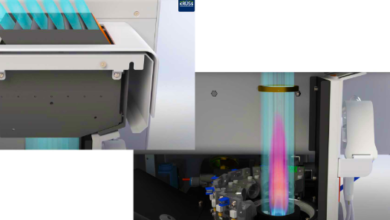
Introduction to Quantum Computing
Quantum computing is one of the most revolutionary advancements in the world of technology. At its core, quantum computing promises to solve complex problems that are virtually impossible for classical computers to tackle. As the world increasingly becomes reliant on digital technologies, the potential of quantum computing grows ever more critical.
While classical computers use binary bits (0s and 1s) to process information, quantum computers leverage the bizarre properties of quantum mechanics. In this article, we’ll explore what quantum computing is, how it works, its potential applications, challenges, and what it means for the future.
What is Quantum Computing?
Quantum computing is a new paradigm of computation based on the principles of quantum mechanics. Unlike classical computers, which use bits to represent either a 0 or a 1, quantum computers use quantum bits, or qubits. Qubits can represent both 0 and 1 simultaneously due to a phenomenon called superposition. This ability to exist in multiple states at once gives quantum computers immense power, enabling them to process vast amounts of data far faster than classical systems.
Key concepts behind quantum computing include:
- Qubits: The fundamental unit of quantum computing, qubits differ from regular bits by existing in multiple states at once.
- Superposition: A qubit can represent 0, 1, or both at the same time, which exponentially increases computational power.
- Entanglement: A quantum phenomenon where qubits become correlated in such a way that the state of one qubit directly affects the state of another, regardless of distance.
See also: How Smart Homes Are Changing the Way We Live
The Science Behind Quantum Computing
Quantum mechanics forms the foundation of quantum computing. Quantum mechanics explains the behavior of particles at the smallest scales, such as atoms and photons. These particles don’t follow the same predictable laws as macroscopic objects. Instead, they behave probabilistically.
- Quantum States and Operations: The behavior of qubits is governed by quantum mechanics, where they exist in a range of probabilities. Operations on qubits manipulate these probabilities, enabling quantum algorithms to process information in new ways.
- Quantum Gates and Circuits: Just like classical computers use logic gates to process information, quantum computers use quantum gates to manipulate qubits. These gates are essential for performing operations in quantum algorithms.
Quantum vs Classical Computing
In classical computing, computers use bits to represent data, either as 0 or 1. The binary nature of classical computing makes it incredibly efficient at solving many types of problems but limits its capacity when faced with exponentially complex problems.
Quantum computers, on the other hand, process data in a fundamentally different way. The key difference lies in the use of quantum bits (qubits). Due to superposition and entanglement, quantum computers can perform operations on multiple possibilities at once, significantly outperforming classical systems in certain tasks.
For example, tasks such as searching large databases, simulating molecules for drug discovery, and breaking traditional encryption algorithms are areas where quantum computing can excel over classical computing.
How Quantum Computers Work
Quantum computers rely on quantum gates to manipulate qubits. These gates are analogous to classical logic gates, but they operate on quantum mechanical principles.
- Qubits: Each qubit can represent a 0, 1, or both at the same time, a property known as superposition.
- Quantum Circuits: These are sequences of quantum gates that manipulate qubits and allow quantum computers to perform calculations.
- Entanglement: By entangling qubits, quantum computers can link qubits in a way that accelerates computation by sharing information instantaneously, no matter how far apart they are.
Key Technologies in Quantum Computing
Several different technologies are being explored for building quantum computers:
- Superconducting Qubits: These are one of the most common forms of qubits. They involve circuits made from superconducting materials that can carry a current without resistance.
- Trapped Ions: Ions trapped in electromagnetic fields can be manipulated using lasers to act as qubits.
- Quantum Dots: Quantum dots are tiny semiconductor particles that can act as qubits, and their behavior is similar to that of individual atoms.
Each of these technologies has its strengths and challenges, but all are important in the race to build practical quantum computers.
Quantum Computing Applications
Quantum computing holds great promise across various industries:
- Cryptography: Quantum computers can break encryption algorithms that are currently secure on classical computers. This has profound implications for cybersecurity.
- Drug Discovery: By simulating molecular interactions at a quantum level, quantum computers could revolutionize drug discovery, making it faster and more accurate.
- Artificial Intelligence (AI): Quantum computers can process vast amounts of data in parallel, offering breakthroughs in machine learning and AI algorithms.
- Financial Modeling: Financial institutions could use quantum computers to run simulations and optimize trading strategies far more efficiently than current methods.
Challenges Facing Quantum Computing
Despite its potential, quantum computing faces significant challenges:
- Error Correction: Quantum systems are highly sensitive to noise and errors, making error correction a critical issue.
- Scalability: Building large-scale quantum computers that are stable and error-free is a major hurdle.
- Hardware Limitations: Current quantum hardware is still in the early stages, and there is a lot of work to be done in improving qubit coherence times and error rates.
The Future of Quantum Computing
The future of quantum computing is both exciting and uncertain. While we are still in the early stages, significant progress is being made in both hardware and algorithms. We can expect quantum computing to become more mainstream over the next decade, revolutionizing fields like cryptography, pharmaceuticals, and AI.
Quantum Computing and Society
Quantum computing has the potential to dramatically impact society:
- Privacy and Security: Quantum computing could make current encryption methods obsolete, necessitating the development of quantum-resistant security measures.
- Economic Impact: The rise of quantum technologies will likely lead to new industries, creating jobs in research, development, and application areas.
Quantum Computing and AI
Quantum computing could enhance AI by speeding up computations required for machine learning models. The ability to handle exponentially larger datasets could lead to breakthroughs in AI applications like natural language processing, image recognition, and more.
The Role of Governments and Private Sector
Governments around the world are investing heavily in quantum computing research. The private sector is also active, with major companies like IBM, Google, and Microsoft leading the charge. This competition is vital for the acceleration of quantum technologies.
How Soon Can We Expect Quantum Computers?
While quantum computers have made great strides, they are still far from being fully realized for general-purpose computing. Experts estimate that we may see practical, scalable quantum computers within the next 10 to 20 years, but significant breakthroughs in technology are needed before that can happen.
Conclusion: Embracing the Quantum Future
Quantum computing promises to unlock new frontiers of computation, offering possibilities that were once thought to be impossible. From transforming industries to solving some of the world’s most pressing challenges, the future of quantum computing is bright.
Frequently Asked Questions
- What are quantum computers used for?
Quantum computers are used for tasks like cryptography, drug discovery, AI, and financial modeling that require immense computational power. - What is a qubit?
A qubit is the basic unit of quantum computing. Unlike a classical bit, a qubit can exist in multiple states simultaneously due to superposition. - Why are quantum computers faster than classical computers?
Quantum computers can perform many calculations simultaneously due to superposition, allowing them to solve problems much faster than classical computers. - What are the challenges of quantum computing?
Challenges include error correction, hardware limitations, and the difficulty of scaling quantum systems. - How close are we to practical quantum computers?
Experts predict we may see practical quantum computers in the next 10-20 years, though much progress is still needed. - Will quantum computing change the internet?
Yes, quantum computing has the potential to revolutionize encryption, data security, and much more, impacting how the internet functions.